

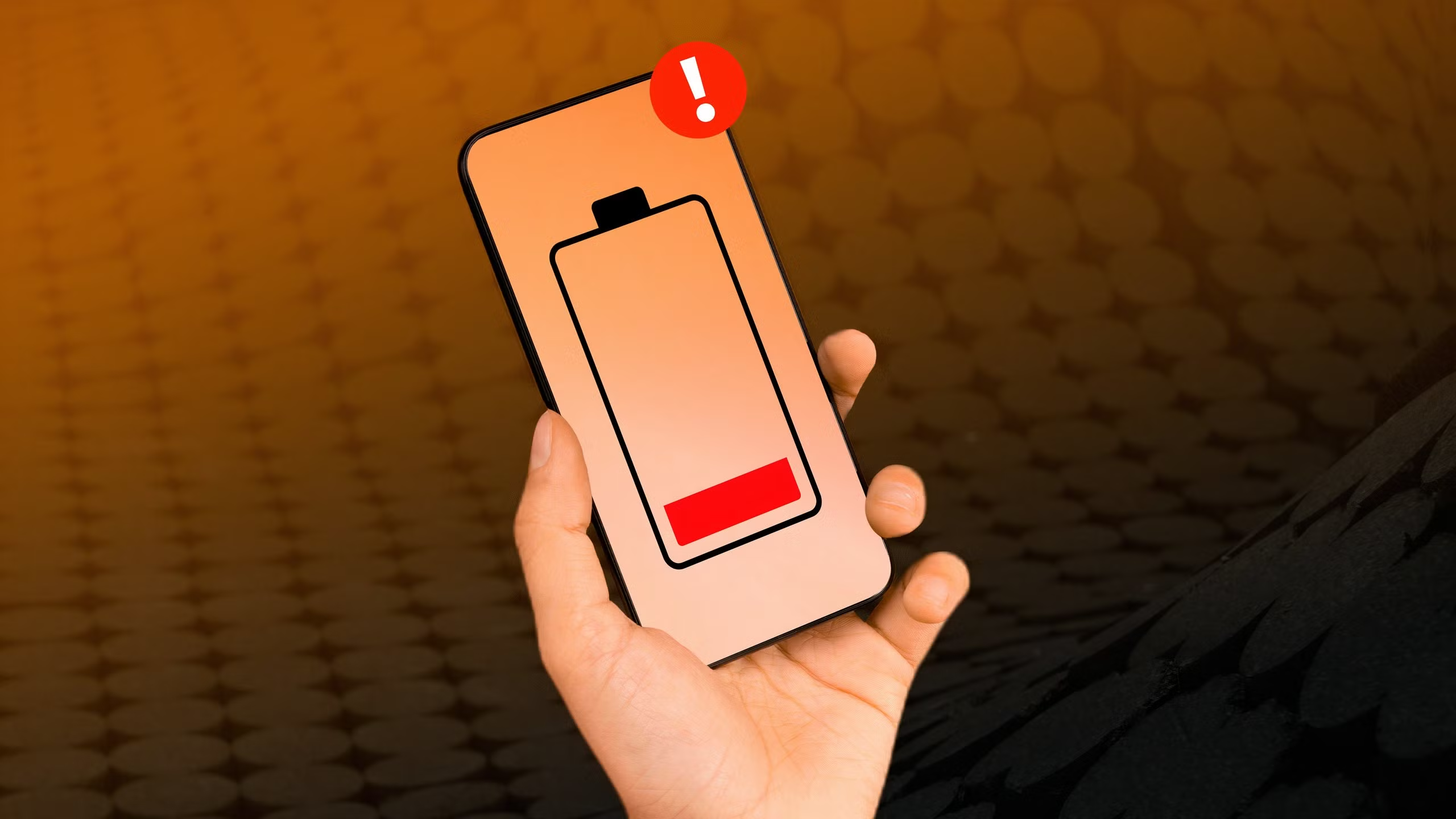
Contemporary smartphones handle energy more intelligently than earlier models, but worries about battery life persist unchanged. One moment the device seems reliable. The following day it loses 20 percent on a brief trip. Internet tips rarely assist since they emphasize obsolete methods while overlooking real phone usage in 2026. Extended browsing, endless update cycles, and a desi app operating next to messaging programs can subtly consume more energy than anticipated, even if the display appears idle.
Battery depletion seldom stems from a single obvious offender. It typically arises from several influential configurations paired with ongoing processes that never completely halt. Fortunately, the primary sources are straightforward to grasp after debunking misconceptions.
The largest battery consumers that many overlook
The display remains the primary factor, though specifics are crucial. Luminosity is evident, but refresh frequency and persistent elements frequently go unnoticed. Elevated refresh rates enhance scrolling fluidity, yet they demand more effort from the screen and visual components. Constant displays, dynamic lock interfaces, and regular activations for alerts accumulate throughout the day.
Connectivity patterns represent another key consumer, particularly during signal transitions. Poor signal strength compels the gadget to exert more to sustain links. This explains quicker power loss in lifts, packed locations, or zones with inconsistent service. Frequent toggling between Wi-Fi and cellular data may generate additional operations, even without deliberate user actions.
Temperature alters all aspects. Heated gadgets deplete energy more quickly as cell chemistry loses efficiency. Warmth additionally prompts defensive responses from the OS, potentially leading to speed reductions and increased oversight tasks. Intensive programs, hot surroundings, rapid recharging, and vivid screens elevate gadget heat. When the temperature rises, power loss commonly grows more apparent.
Hidden operations: the energy seepage seldom observed by users
Numerous individuals believe power consumption occurs solely during active device handling. Current smartphones function differently. Concealed operations may persist continuously, even with the display deactivated.
Applications update material, synchronize communications, and query servers repeatedly. Certain ones perform this often to provide “real-time” interactions. Every concealed query briefly rouses device sections. A single activation is innocuous. Dozens turn substantial.
Alert deliveries form part of this narrative. Each alert incurs an expense. It awakens the gadget, engages transmitters, and frequently initiates concealed tasks for proper alert presentation. Group discussions, community networks, and information services can produce a continuous flow of minor impacts that build up.
Position tracking frequently saps energy in unnoticed ways. It involves more than satellite navigation. Wireless detection and short-range scanning might stay operational even without open position-dependent programs. These concealed detections aid the device in “enhancing precision,” but they maintain transmitters and detectors active.
Concealed depletion appears clearer with multiple competing programs. The OS aims to regulate this, though standard settings prioritize ease. Absent minor tweaks, the device acts as if perpetually alert.
Widespread battery fallacies that squander effort
Power guidance abounds with routines that seem effective but achieve minimal. A frequent fallacy is that terminating applications forcibly routinely conserves energy. Generally, it fails to. Android and iOS oversee storage deliberately. Shutting programs recurrently might heighten depletion since the device reloads them anew, reconstructing information and relaunching concealed procedures.
Another misconception is that the energy-saving mode ought to remain active daily for all. Power conservation options aid in particular scenarios, notably when charge is minimal and extending duration is key. Employing them continuously may introduce inconvenience through postponed updates, lowered efficiency, and erratic alerts. This prompts users to interact more and update by hand, possibly nullifying the advantages.
Recharging fallacies prevail, too. Many continue to dread nighttime charging, but current devices incorporate safeguards that lessen battery strain. More critical are warmth and recurrent full depletions. A gadget that regularly nears empty then receives a quick recharge when heated ages swifter than one maintained at balanced levels.
Several fallacies recur persistently
- Terminating all programs boosts battery duration universally.
- Maintaining power saver active indefinitely is invariably superior.
- Deactivating Bluetooth conserves much even without connections.
- Diminishing luminosity is the sole significant solution.
- Nighttime charging inherently “damages” the battery.
- Erasing cache enhances battery efficiency.
Battery condition is influenced by habits, not isolated maneuvers. Fallacies endure as they are simple to propagate. They prove less dependable in today’s device environments.
Which configurations yield the greatest impact in everyday scenarios
The most effective alterations are generally uncomplicated. Automatic luminosity assists as it avoids the display remaining overly illuminated. For various users, a modestly reduced manual luminosity limit also lessens depletion without rendering the device disagreeable.
Refresh frequency selections are important. Devices permitting variable refresh frequencies commonly achieve optimal equilibrium since elevated refresh applies solely when required. Fixing a gadget to maximum refresh constantly represents an unseen consumer for those scrolling extensively.
Concealed limitations produce tangible outcomes when implemented choosily. Limiting concealed operations for programs unnecessary for perpetual refreshes decreases activations and connection queries. Communication tools and essential functions can stay unrestricted. Amusement and purchasing programs frequently require no complete concealed liberty.
Authorizations influence power secondarily too. Position permission is paramount. Granting position solely “during app usage” curtails quiet monitoring and detection. Turning off wireless and short-range detection in OS configurations may assist, particularly for those infrequently utilizing position-dependent functions.
Alert management is undervalued. Reduced alerts equate to fewer activations. Disabling alerts for minor-priority programs commonly enhances battery beyond expectations as it diminishes both display triggers and concealed tasks.
The enduring battery perspective
Power oversight succeeds optimally when viewed as an ongoing routine instead of a routine crisis. Minor modifications accumulate across periods. A device operating cooler, activating less, and evading perpetual connection flux will appear steadier and easier to sustain.
It additionally benefits to identify typical patterns. Power diminishes swifter on occasions with intensive imaging, poor signals, routing, and prolonged viewing. This does not invariably indicate battery malfunction. The strongest sign of genuine issues is consistency. If a device dissipates energy swiftly when dormant, warms during mild handling, or powers off prematurely at elevated levels, the battery could be deteriorating.
Occasionally, the most sensible remedy is no further configuration. Cells degrade. When a gadget ages several years and the battery fails to retain a steady charge, substitution can reinstate routine functionality superior to any refinement.
Battery fallacies offer mastery via maneuvers. Genuine enhancement derives from comprehending actual power users nowadays – display patterns, connection states, concealed operations, and warmth. After management, contemporary smartphones can provide the reliable battery duration that individuals anticipate.
